
Chapter 12: Punishing two common mistakes (beginner)
We will study two common opponent weaknesses and see how to take advantage of them to win as many chips as possible.

Gandalf
Professional Spin & Go player, co-founder of Poker Sciences

In Spins, a large part of your winnings comes from fish mistakes.
In this chapter, we will analyze two common mistakes made by recreational players. For each one, we will compare their actions to GTO theory. The goal is to better understand these weaknesses and know how to extract the most chips from them.
This is the first time we cover this concept in this course: GTO (Game Theory Optimal) is a mathematical strategy that allows you to play in a balanced and unexploitable way, so you remain profitable against any type of opponent, even without knowing their playing style.
Don't worry if this isn't clear yet, we will explore this concept in more depth in this chapter and especially in the next one.
Error #1: Recreational players call too much
Regardless of the situation, recreational players struggle to let go of their hands once they've invested in the pot (calling station). This tendency shows up in several scenarios:
Scenario #1: Villain limps, you isolate to 3x
Whether it's SB vs BTN, BB vs SB in 3-max, or BB vs BTN limp + SB call, the reaction is the same: you raise and they defend way too much.
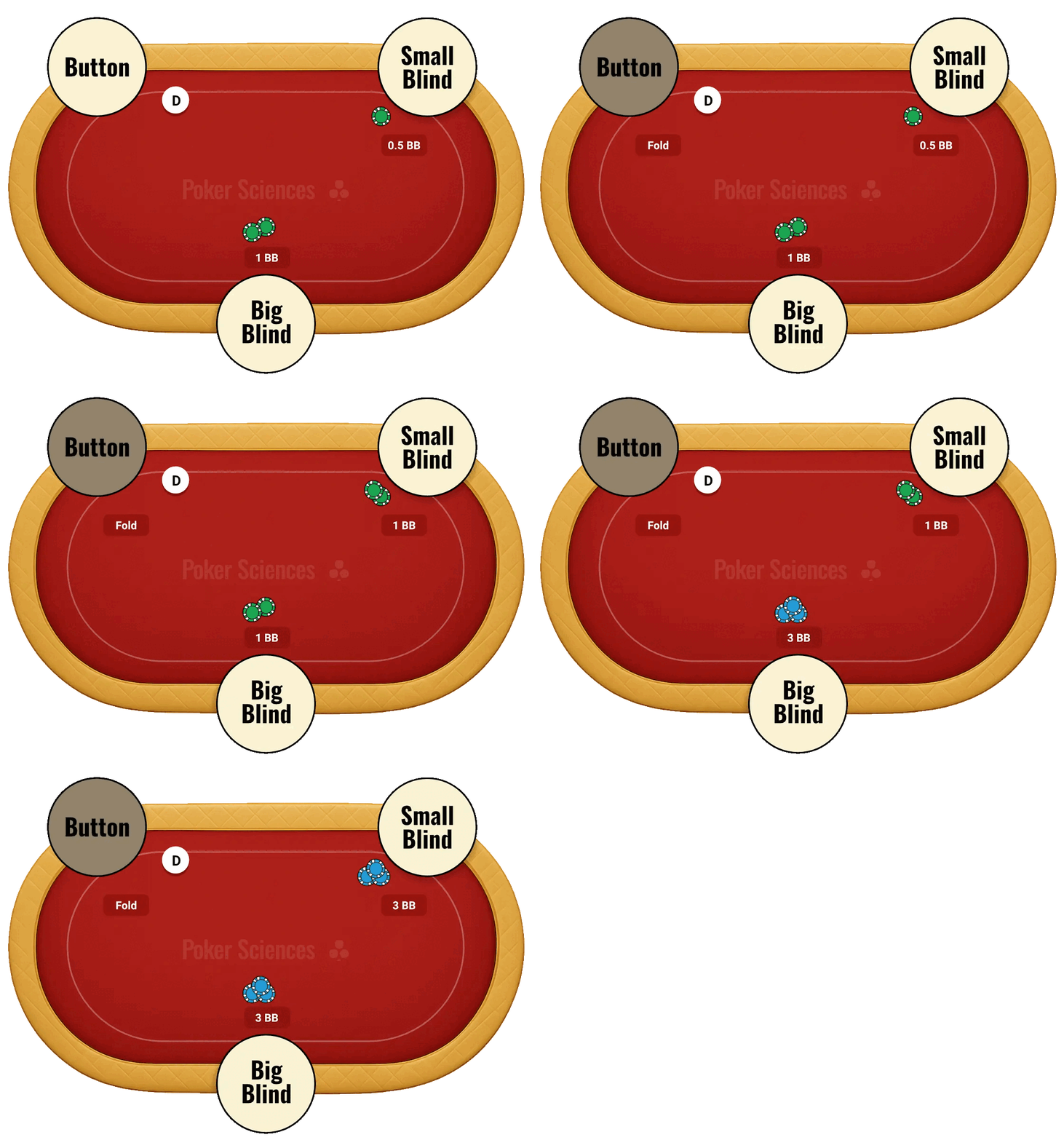
Let's look at this situation at 25 bb deep, comparing the Small Blind's (SB) call frequency to GTO theory:
| Situation | Recreational players call frequency | Optimal theoretical call frequency (GTO) |
|---|---|---|
| SB limp → BB ISO 3x | 76% | 35% |
Recreational players call twice as much as they should against an ISO. That's a huge difference. A deviation of just a few percent can already be exploited profitably, so imagine such a large difference...
The recreational player data in these tables is based on over 1 million hands I've played in Spins over several years. The GTO frequency comes from solvers (notably GTO Wizard).
Scenario #2: Villain opens 2x, you 3-bet all-in
Whether it's SB or BB against a BTN open in 3-max, or BB against a SB open in HU, when you 3-bet all-in on their raise, they will often make the mistake of calling too wide.
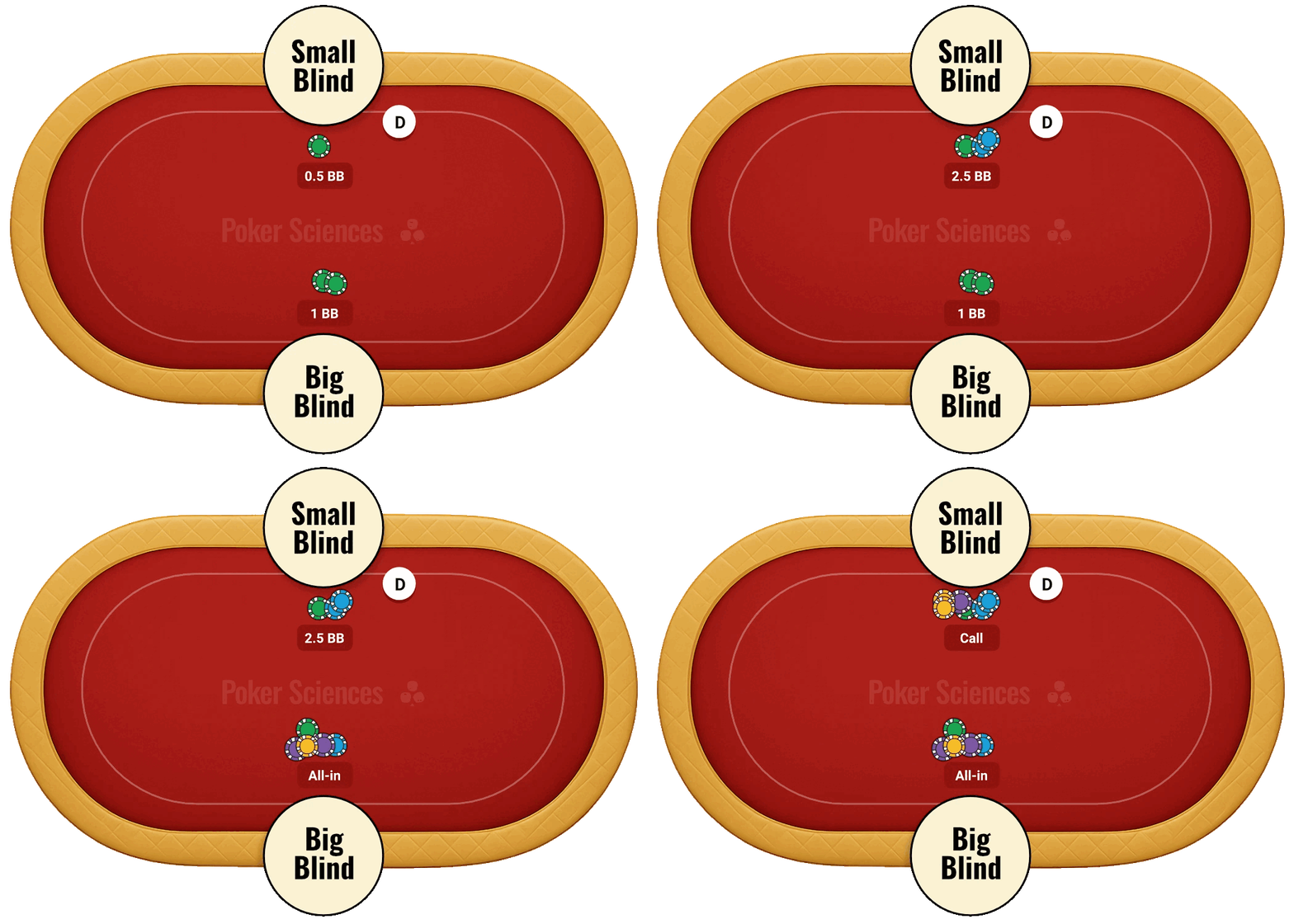
Let's look again at this situation at 25 bb deep, comparing the Small Blind's (SB) call frequency to GTO theory:
| Situation | Recreational players call frequency | Optimal theoretical call frequency (GTO) |
|---|---|---|
| SB minraise → BB 3-bet all-in | 65% | 26% |
Once again, recreational players call much more than they should against an all-in ISO.
As I mentioned earlier, a deviation of just a few percent from GTO already constitutes a profitable mistake to exploit. Now imagine a difference of over 30%...
How to exploit this mistake?
Now that we've seen that recreational players have a recurring leak, we need to exploit it to maximize our profitability against them. Here's what to do in this situation:
- Be aggressive with your value hands: raise your good hands more often, even slightly dominating ones, because villain calls way too much with dominated hands. And don't hesitate to 3-bet shove your strong hands rather than making a smaller-sized 3-bet.
- Limit bluffs: since recreational players don't fold enough, there's no point attempting ISO bluffs or 3-bet bluffs. You won't get the part of their range you'd want to see folding.

Error #2: Recreational players don't open shove enough
Another common mistake from recreational players is that they underuse open shoves (OS). Rather than pushing their chips optimally, they prefer to limp or minraise, letting you see flops cheaply.
Definition: Open Shove (OS) simply means going all-in directly preflop.
Let's look at some statistics comparing their open shove frequency to the optimal strategy (GTO):
| Situation | Recreational players Open Shove frequency | Optimal Open Shove frequency (GTO) |
|---|---|---|
| BTN 9 bb deep | 15% | 30% |
| SB vs BB 11 bb deep | 11% | 38% |
| HU SB 7 bb deep | 21% | 52% |
| HU BB vs SB limp 13 bb deep | 11% | 16% |
As we can see, recreational players open shove much less than they should, regardless of the situation.
How to exploit this mistake?
- Take advantage to see cheap flops: their tendency to minraise or limp rather than shove allows you to realize your equity with many hands. In a way, you don't have to do anything, just take advantage of your opponents' passivity to see free flops.
- Adjust your calling range against their all-ins: when they do open shove, their range is often more oriented toward strong hands (Ax, broadways, pairs). So it's better to tighten your calling range against their shoves slightly.
- Be patient and wait for better spots: since your opponents let you see flops for free, don't try to win every pot at all costs by risking getting eliminated prematurely.